

From 1 September 2026, every VAT-registered business in France must be able to receive its supplier invoices electronically. Not « eventually » — on that date, with no size exemption. The obligation to issue follows company size: large enterprises and mid-caps from 1 September 2026, SMEs and micro-businesses from 1 September 2027.
If you run a group with French subsidiaries on Microsoft Dynamics 365 Business Central, this is your problem too — and the assumption that « the ERP will handle it » is the most expensive mistake of this reform. French e-invoicing is not a checkbox. It is a data-quality and configuration requirement that touches almost every table in your Business Central.
Compliance lives in your data, not in a button
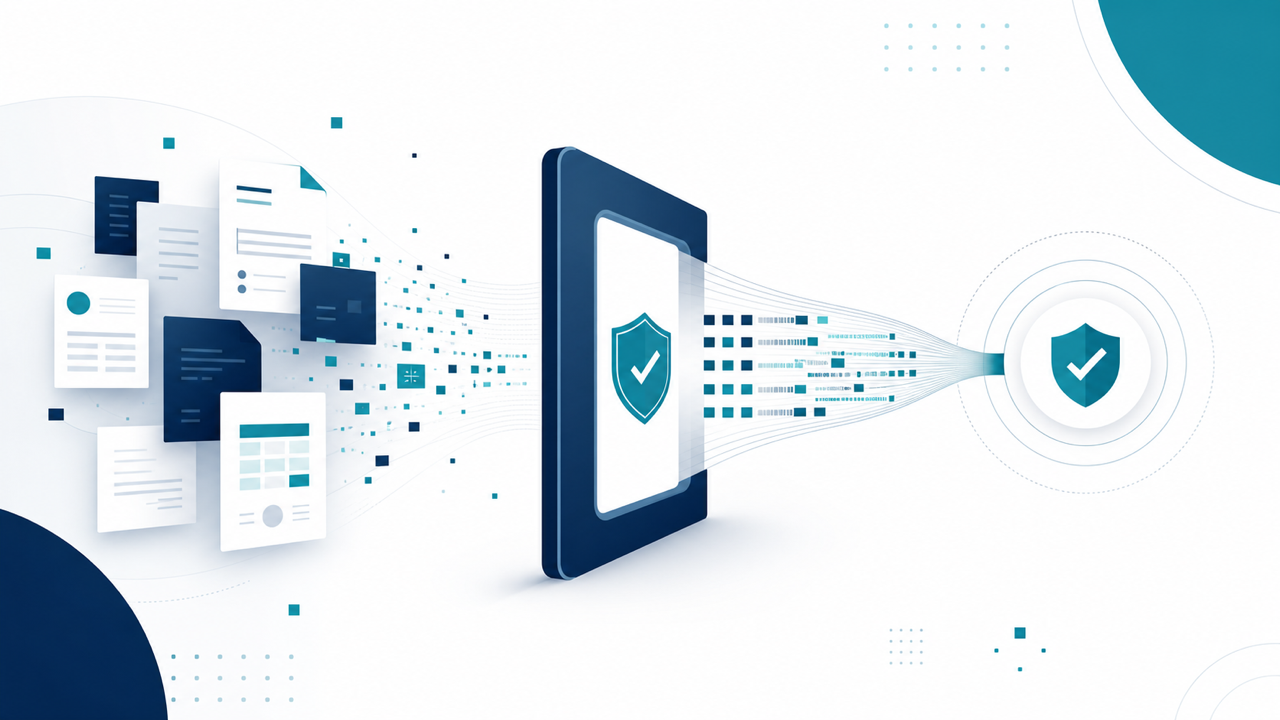
A compliant e-invoice is not a PDF. It is a structured file (Factur-X, UBL or CII) that flows through a government-accredited Plateforme de Dématérialisation Partenaire (PDP) and must carry precise, machine-readable mandatory fields. If a customer's SIREN is missing, if an item VAT rate is misconfigured, if a delivery address is absent, the invoice is rejected — not by your accountant, by the platform. At €15 per invoice (capped at €15,000/year), the cost of dirty master data becomes mechanical.
The risk is not technical — it is in your master data. And that is exactly what no product demo shows you.
The 8 areas to audit in your Business Central
At Asio Services we assess a Business Central's readiness across 8 areas — the places where, in practice, compliance is won or lost.
1. Business partner data (customers & vendors)
The heaviest and most neglected area. Valid SIREN/SIRET, intra-EU VAT numbers, normalized addresses, the routing identifier to the correct platform. An incomplete partner master means a share of your invoices rejected on day one.
2. Company data
Your own legal identifiers, your PDP enrolment, the consistency of your establishments. A poorly framed multi-entity setup multiplies the blind spots.
3. Invoice data
The new mandatory fields (customer identifier, delivery address, nature of the transaction, the « paiement sur les débits » option…) must exist and flow automatically. Keying them by hand on every invoice is not an option at volume.
4. Business Central configuration
Number series, document setup, the e-document module, supported formats. This is the plumbing that turns a BC transaction into a compliant invoice.
5. Item data
Every invoice line carries its VAT. Misconfigured item VAT rates or categories produce line-level non-compliance — invisible until rejection.
6. Employee-related data
People-driven flows (expense reclaims, re-invoicing, issuing and approval roles) are in scope. Access governance is not an HR detail — it is an audit-trail requirement.
7. Volumes & flows
How many invoices, through which channels, with which edge cases (credit notes, prepayments, reverse charge)? Volume decides your PDP integration architecture. Underestimate it and you meet the wall in September.
8. Process & governance
Who is accountable, what is the procedure on rejection, what traceability? The reform is not an IT project — it is a business process that has to hold over time.
Where do you actually stand?
Reading the list is one thing. Knowing where your Business Central falls short is another. We built a free audit that assesses your configuration across these 8 areas in ~15 minutes, at your own pace. No automatic score: an Asio consultant reviews your answers and comes back with concrete recommendations.
→ Start your Business Central e-invoicing readiness audit
September 2026 looks far away. A partner master to clean and a PDP integration to scope are not. Better to find the gaps now, while there is still time to close them properly.